
These market forecasts are underpinned by key growth drivers: rising global demand for luxury perfumes and natural products; the expansion of agarwood's applications in perfumery, cosmetics, aromatherapy, and wellness; and its sustained cultural and religious significance in regions like SEA, SA, and the ME, where it is extensively used in incense, oud perfumes, and ceremonies. This demand is further strengthened by growing disposable incomes and a renewed interest in traditional aromatic practices, notably in countries such as India, Japan, and the UAE. Concurrently, tighter environmental regulations and CITES oversight are reinforcing consumer preference for authentic, sustainable products, accelerating the shift towards plantation-grown agarwood and certified supply chains.
Given the deep cultural connections and concentrated production base in the Asia-Pacific region, the regional growth model consistently demonstrates the Asia-Pacific's dominant position in the market. Meanwhile, driven by trends in luxury consumption, increased awareness of natural and sustainable ingredients, and expanding health applications supported by online retail and specialized distribution channels, the use of agarwood is growing in North America and Europe.
Geographical Market Distribution and Trade Patterns
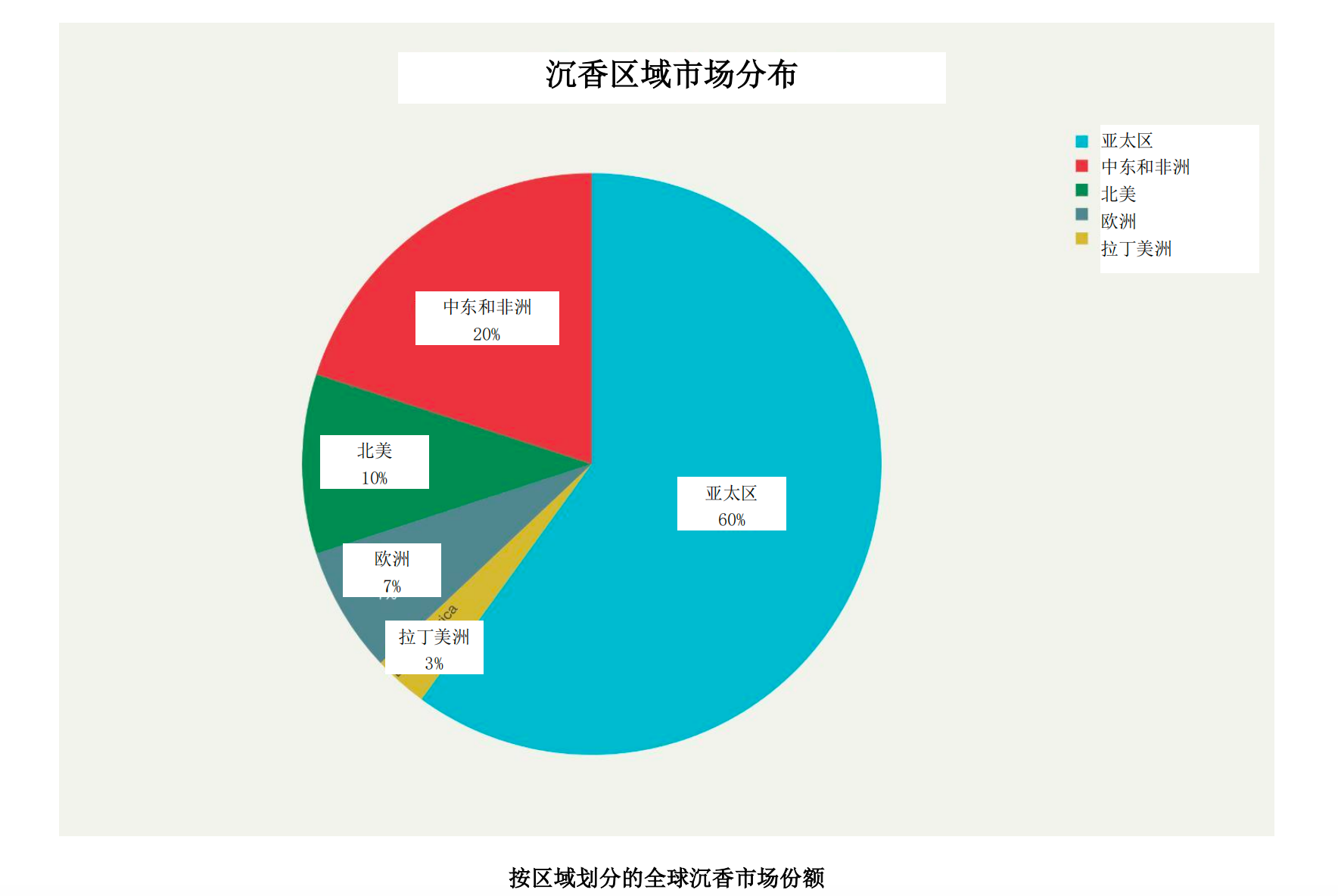
The global agarwood market exhibits a highly concentrated regional distribution pattern, reflecting both production capacity and cultural consumption preferences. Driven by profound cultural significance, traditional medicinal applications, and well-established production infrastructure, the Asia-Pacific region dominates the market with approximately 60% of global consumption. The Middle East and Africa account for 20% of the market, primarily focused on luxury oud-based perfumes and traditional incense applications.
The main export pattern shows that, according to comprehensive trade analysis, Vietnam is the world's leading supplier, accounting for 95% of agarwood export shipments from October 2023 to September 2024. However, based on trade data analysis from 2001 to 2019, Mainland China emerged as the leading exporter (in terms of export value), with an average annual export value of approximately $1 million. India accounts for 16% of global exports, Hong Kong for 27%, and Singapore for 9%, serving as important distribution hubs.

Contact Number: (020) 8758 6831
Email: qiaru@gzqiaru.com
Address: Room 2014, No. 656 Huangpu Avenue Middle, Tianhe District, Guangzhou